
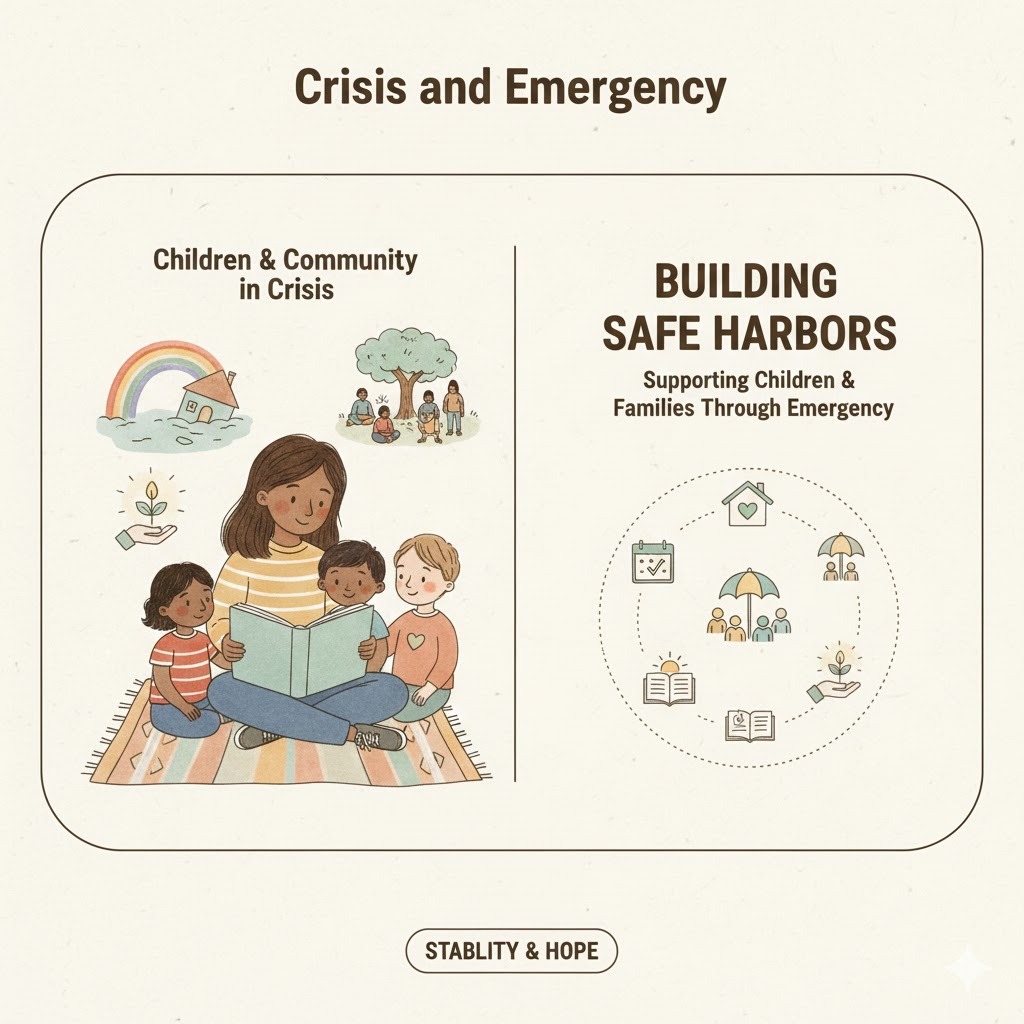
Crisis and Emergency
Because of this change in climate, natural disasters like bushfires, floods, and storms are becoming more frequent and severe in Australia (Chavez Marinkovic et al., 2022). Such events can interrupt family members’ lives and communities, leading to crisis conditions that take a huge toll on children and families. This context is important in early childhood education because young children are particularly vulnerable to the effects of disasters. They require stable, safe contexts and routines to grow and learn (Chavez Marinkovic et al., 2022). Social theories such as Bronfenbrenner’s ecological model emphasise the impact of disasters on children on multiple levels, including immediate family distress, social disruption, and societal issues at play (Chavez Marinkovic et al., 2022). Research demonstrates that experiences of disasters vary greatly across Australian society, and communities that are Indigenous and individuals with low socioeconomic status often experience the impact of a disaster more significantly (Chavez Marinkovic et al., 2022).
Impact on Children and Families:
Disasters impact children’s development, learning, and wellbeing in various ways. They can lead to trauma, anxiety, problems with sleep and trouble concentrating and socialising (Children’s Health Queensland, 2022). And these consequences can persist long after a disaster has occurred. Disruption of early childhood routines and education undermines children’s sense of security and belonging, which are essential for healthy development (Chavez Marinkovic et al., 2022). Families may experience increased stress, financial hardship, and displacement, which affect their ability to provide nurturing environments. Early childhood services have a key role in offering supportive, safe spaces and rebuilding children’s resilience and a sense of normalcy (Chavez Marinkovic et al., 2022).
Social Policy and Australian Responses:
Australia’s response to crisis in childhood and family support is informed by several policies. The National Strategy for Disaster Resilience aims to encourage preparedness efforts at the community level and recovery. The Australian Government’s Crisis Management Framework aligns an emergency response plan with this to coordinate responses such as childcare and family provision during a disaster (Australian Government, 2024). State governments use recovery programs to provide counselling and practical support for communities in similar situations. Research has found that the needs of children in disasters are often overlooked leading to a call for child-centered disaster planning (Chavez Marinkovic et al., 2022). The importance of culturally sensitive support, particularly for Aboriginal and Torres Strait Islander children, is becoming more well appreciated by the policies in place to help protect the connection to family and culture in times of crisis (Chavez Marinkovic et al., 2022).
Strategies for Practice:
Establishing predictable and safe routines to ensure stability and lower anxiety.
Using play and expressive activities to assist children in learning to make sense of and articulate their experiences and feelings in a way to support them in a safe environment.
Working with families to help provide steady emotional support and discuss coping mechanisms.
Referring families to community services, including mental health counseling, financial aid, and housing assistance.
Keeping a close eye on the children for signs of trauma and meeting with specialists to intervene in time to help.
Educators can employ these strategies through creation of caring environments, fostering resilience through social-emotional learning, and advocating for the interests of children in recovery planning (Chavez Marinkovic et al., 2022; Children’s Health Queensland, 2022).
Community and Professional Partnerships:
Australian Red Cross: Provides disaster recovery support and family reunification services. Beyond Blue: Offers mental health resources tailored for children and families in crisis. SNAICC: Supports culturally safe interventions for Aboriginal children affected by disasters. Local health services: Provide counseling and wellbeing programs for young children.
State emergency services: Collaborate with early childhood services to ensure safety and information dissemination during emergencies.
These organisations collaborate with educators to ensure coordinated care and culturally appropriate support is available to children and families across Australia (Chavez Marinkovic et al., 2022).
Resources for Educators and Children:
Projects, programs and websites:
Your Climate Superpowers: Provides young people with knowledge and tips to manage the challenges of climate change. www.climatesuperpowers.org
Kids Helpline: Provides crisis support and wellbeing resources for children. https://kidshelpline.com.au
Australian Disaster Resilience Knowledge Hub: Resources on disaster preparedness and recovery. https://knowledge.aidr.org.au
Emerging Minds: Tools for trauma-informed care in early childhood. https://emergingminds.com.au
Children’s storybooks:
The Great Big Book of Families by Mary Hoffman: helps students to understand diverse family experiences, including those affected by crises.

A Terrible Thing Happened by Margaret M. Holmes: deals with how children respond to trauma in a very easy-to-understand way.

When Sophie Gets Angry Really, Angry by Molly Bang helps students process strong feelings.

I’m Not Scared, You’re Scared by Trace Moroney: facilitates a better understanding and navigation of fears in childhood following disturbing experiences.

Children’s videos, shows, podcasts:
- Bluey (ABC Kids): Episodes on feelings, family support, and being part of a community.
- Play School (ABC): Shares stories and songs to help children learn about their surroundings and about resilience toward safety, kindness, and adversity.
- ABC Kids Listen podcasts: Listen to stories and songs that help support wellbeing and coping.
- The Calm Zone: Here children can do mindfulness and relaxation activities.
These resources help educators promote understanding, empathy, and resilience in children affected by crises and natural disasters (Chavez Marinkovic et al., 2022).