Cultural and Diversity
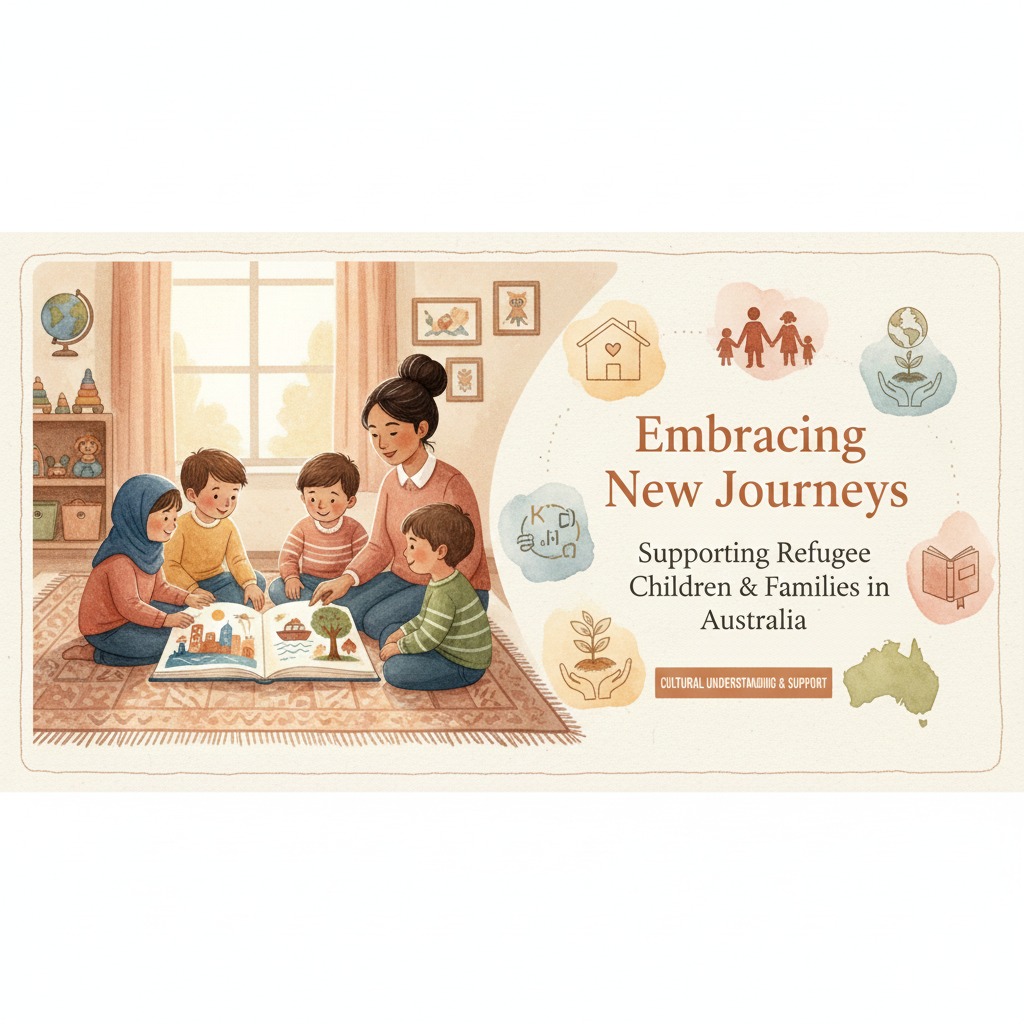
Refugee families are those who are refugees who have fled their home countries in consequence of a crisis such as conflict, persecution, disaster and are now finding their refuge in Australia. Their struggles, often combined with traumas, losses and large adaptations to an entirely new culture, weigh heavily. In early childhood education, getting to know refugee families is important because these children face different challenges that affect their learning and wellbeing (Cologon & Hayden, 2017).
Sociological models of development, like Bronfenbrenner’s ecological systems theory, shed light on how interactions between a child’s family, community, and society shape the development of a child. To refugee children, multiple streams of change, such as acculturating to a new culture and language as well as dealing with previous trauma shape development and relationships (Grace, Burns & Menzies, 2017).
In Australia refugee families are from diverse backgrounds, as they come from many countries with diverse languages and customs. As these families settle and integrate, the need for flexible and culturally responsive early childhood education will grow (Parliament of Australia, 2015). This diversity underscores the need to familiarise ourselves with each child’s background and experiences.
Impact on Children and Families:
Refugee children have learned language, emotional and social barriers which could be difficult to overcome as they have not been familiarised with the new setting. Concentration and learning engagement can be impacted with stress and trauma. Language barriers, unfamiliar systems or discrimination also make it difficult for families to access services. These challenges must be acknowledged within early childhood settings and inclusive, supportive environments provided (Cologon & Hayden, 2017).
Children need to feel safe and trust educators themselves, so relationships are key. Supporting family participation from a variety of cultural backgrounds helps keep children’s identities and resilience high in teaching and learning and wellbeing (Grace, Burns & Menzies, 2017).
Social Policy and Australian Responses:
Australia has programs designed to assist refugee families e.g. the Humanitarian Settlement Program is one around housing, language learning and access to healthcare. Equity and inclusion for all children, including refugees and their families, is highlighted in the National Quality Framework and Early Years Learning Framework (Parliament of Australia, 2015).
Data suggest many newly arrived refugee families face economic hardship and social isolation, making access to services critical. This necessitates that early childhood services apply culturally safe practices and collaborate with community organisations to address the needs of these families effectively (Cologon & Hayden, 2017).
Strategies for Practice:
Form Relationships of Trust: To create environments that are safe and welcoming, cultivate relationships with children and families that are sensitive and respectful.
Pedagogy that is Culturally Appropriate: Include children’s backgrounds, languages, and customs in lessons.
Encourage Language Development: To promote English language development, use visual aids, telling stories, and family involvement.
Trauma-Informed: To increase emotional wellbeing, recognise signs of trauma and react with patience and empathy.
Encourage Family and Community Involvement: Work together with families and community leaders in developing connections and offer suitable cultural support.
Educators can implement them, for example, by developing inclusive lesson plans, hosting multicultural events and collaborating with interpreters and cultural organisations.
Community and Professional Partnerships:
Refugee Health Network: Aids in the healthcare and overall wellbeing of refugee families.
Settlement Services International: Offers support with housing, education, and social integration efforts.
Australian Human Rights Commission: Promotes advocacy against discrimination while championing the rights of refugees.
Local Multicultural Councils: Enhance cultural connections and foster community engagement.
Early Childhood Australia: Delivers mental health resources designed for varied communities.
Collaborations with these organisations enable early childhood services to establish extensive support systems for families seeking refuge.
Resources for Educators and Children- Projects and Programs:
Humanitarian Settlement Program: Helps refugee families upon their arrival in Australia.
Be You: Promotes mental health through culturally competent resources.
Early Learning Languages Australia: Facilitates multilingual education, incorporating languages spoken by refugees.
Australian Refugee Children’s Literacy Project: Concentrates on enhancing literacy skills among refugee children.
Children’s Storybooks:
My Two Blankets by Irena Kobald: Chronicles the journey of a refugee child adjusting to life in a new country.

The Arrival by Shaun Tan: A silent graphic novel illustrating the experiences of refugees.

Grandfather’s Journey by Allen Say: Reflects on themes of migration and cultural identity.

Where Are You From? by Yamile Saied Méndez: Honors heritage and the concept of belonging.

Videos, Educational Shows, Podcasts:
ABC Kids Multicultural Stories: A series of videos that highlight various cultural backgrounds.
The Arrival animated short: Adaptation of Shaun Tan’s book that visualises the journeys of refugees.
Welcome to Australia podcast: Features narratives from refugees alongside cultural perspectives.
Be You webinars: Focus on strategies for supporting the mental well-being of refugee children.